Jute

Jute
Jute is a long, soft, and shiny natural fiber obtained mainly from plants of the genus Corchorus, especially Corchorus capsularis and Corchorus olitorius. It is one of the most affordable and widely used natural fibers in the world, second only to cotton in terms of production and usage. Jute is primarily cultivated in warm, humid regions with alluvial soil, particularly in countries like India and Bangladesh, which together account for the majority of global production. The fiber is extracted from the stem of the jute plant through a process called retting, where the stalks are soaked in water to separate the fibers from the woody core. Jute fibers are strong, biodegradable, breathable, and environmentally friendly, making them an important sustainable alternative to synthetic materials.
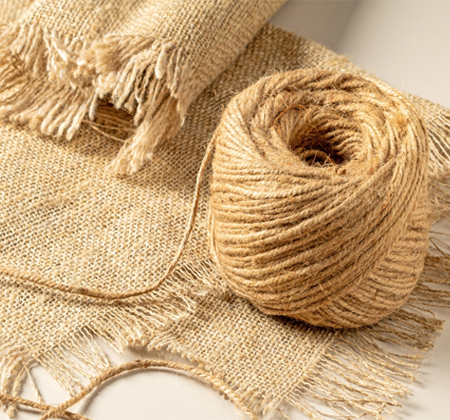
They are commonly used to produce ropes, twine, carpets, mats, sacks, and hessian cloth, as well as eco-friendly shopping bags and packaging materials. Jute also plays a significant economic role by providing employment to millions of farmers and workers in producing regions. Due to its low cost, renewability, and minimal environmental impact, jute is often referred to as the “golden fiber,” highlighting both its color and economic value.